Choosing Your First Nozzle Size Upgrade for a Bowden Extruder
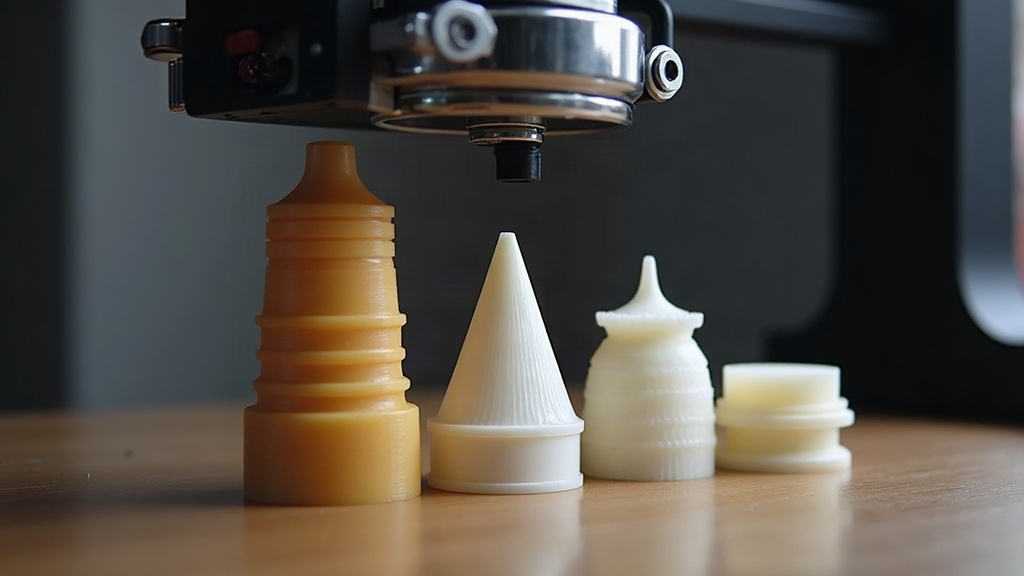
If you’re running a Bowden extruder printer and wondering whether to bump up your nozzle size, here’s the short version: a 0.6mm nozzle is the best first upgrade for most people coming off the stock 0.4mm. It hits a sweet spot between speed, strength, and detail, and it’s forgiving enough for Bowden setups, which already deal with more pressure advance and retraction lag than direct-drive machines.
Why Bowden Extruders Need a Different Approach
Bowden extruders push filament through a long PTFE tube before it ever reaches the hotend, rather than sitting right on top of it. That extra distance creates a kind of “give” in the filament, a compressible slack that messes with retraction timing and flow consistency. Going bigger on nozzle size cuts down on pressure-related artifacts, and here’s why:
- Bigger nozzles need less extrusion pressure per volume of plastic, which eases the strain on that long Bowden path
- Oozing and stringing from retraction lag get masked more easily by thicker, more consistent beads
- You can get away with slightly slower melt-to-flow ratios without under-extrusion showing up as obvious gaps or thin spots
That’s exactly why jumping from 0.4mm straight to something like 1.0mm is usually a mistake for Bowden beginners. The leap is too big, and it just amplifies whatever retraction quirks you already had.
Best First Upgrade: 0.6mm Nozzle
For most Bowden printers out there (Ender 3, CR-10, Artillery, and the like), 0.6mm lands right in the sweet spot:
- 50% more flow than 0.4mm at the same layer height and speed
- Print times drop noticeably, often by 30-40%, on functional prints
- Still holds enough detail for most mechanical parts, brackets, enclosures, and even moderately intricate models
- Pairs well with 0.2-0.3mm layer heights, which is already the default in most slicers anyway
When to Consider 0.8mm Instead
If your main goal is big, chunky, structural prints (planters, tool organizers, jigs) and you don’t care about fine surface finish, 0.8mm is a reasonable next step. It speeds things up even more and adds wall strength per layer. But there’s a catch:
- Fine text, small holes, and thin walls start looking noticeably coarser
- You’ll need to re-tune retraction and temperature more aggressively than with 0.6mm
- Flow rate calibration matters even more, since Bowden setups can still under-extrude if PID or pressure advance isn’t dialed in properly
For a first upgrade, 0.6mm is the safer, more versatile choice.
What You’ll Need to Change
Swapping nozzle size isn’t a plug-and-play affair. Your slicer settings need some adjusting too:
- Nozzle diameter in your slicer profile (Cura, PrusaSlicer, OrcaSlicer, whichever you use)
- Line width, typically set to 100-120% of the nozzle diameter
- Layer height, which can go up to 75% of nozzle diameter (so 0.45mm max for a 0.6mm nozzle, though most people stick to 0.2-0.3mm)
- Extrusion multiplier/flow rate, which you should recalibrate with a flow test cube
- Print speed, since each pass now lays down more plastic, letting you push speed higher
Common Mistakes to Avoid
- Not re-slicing with the new nozzle profile. Running a 0.6mm nozzle with an old 0.4mm profile leads to serious under-extrusion
- Skipping flow calibration. Every nozzle has a bit of variance, and a quick calibration cube can save you hours of chasing phantom problems
- Expecting the same fine detail. Bigger nozzles trade some precision for speed and strength. That trade-off is the whole point
- Forgetting to clean the hotend. If you’re reusing one, leftover filament residue from the old nozzle can clog up the new one fast
Is It Worth It?
For hobbyists mostly printing functional parts, replacement brackets, enclosures, or prototypes: yes. A 0.6mm nozzle upgrade on a Bowden printer usually pays for itself within a handful of prints, purely from time saved. If you print miniatures or heavily detailed models often, just keep your 0.4mm nozzle around for those and swap between the two as needed. Most printers let you change nozzles in under 10 minutes anyway.
Final Thoughts
For a first nozzle upgrade on a Bowden extruder printer, 0.6mm gives you the best balance of speed, strength, and print quality, without demanding a major overhaul of your setup. Pair it with the right slicer settings and a proper flow calibration test, and you’ll get faster, stronger prints with almost no downside. It’s a genuinely worthwhile upgrade for most FDM hobbyists.