Resin vs FDM for Tabletop Miniatures: Detail, Cost, and Cleanup
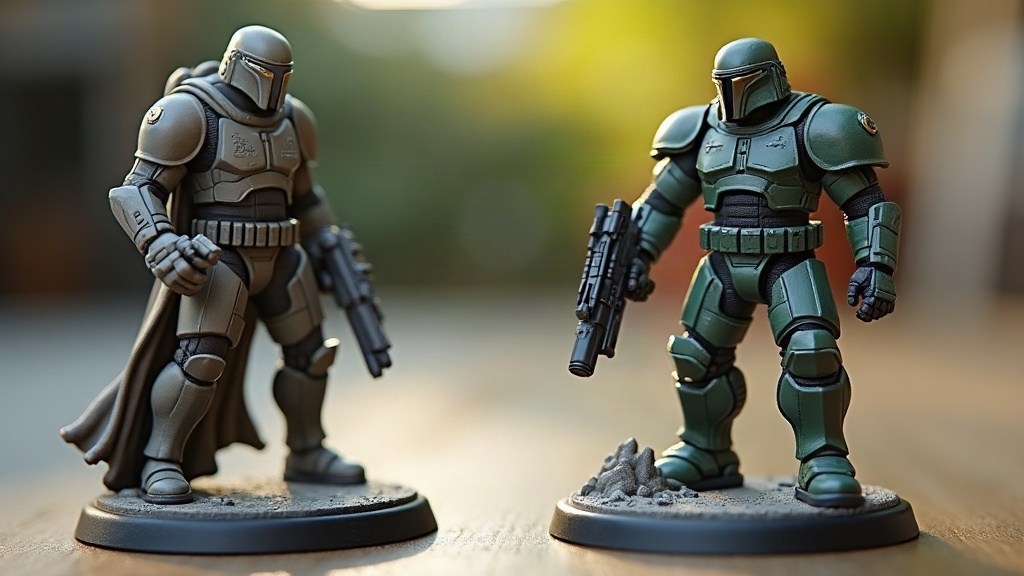
If you paint Warhammer armies, D&D parties, or custom tabletop terrain, the resin vs FDM question comes up fast. The short answer: resin wins on detail and surface quality, FDM wins on cost, speed for large objects, and cleanup simplicity. Which one you should buy really comes down to how much fine detail your minis need, and honestly, how much mess you’re willing to put up with in your workspace.
Detail Quality: Why Resin Still Wins for Minis
Resin (MSLA/LCD) printers cure liquid photopolymer layer by layer using light, typically at 0.01–0.05mm layer heights. That precision shows up in a few obvious ways:
- Crisp facial features, chainmail texture, and tiny weapon details
- Smooth curved surfaces with no visible layer lines
- Accurate reproduction of 28mm–32mm scale miniatures straight from the vat
FDM (fused deposition modeling) printers extrude melted plastic filament, usually at 0.1–0.2mm layers, even if you’ve dialed in a fine 0.2mm nozzle. Put that to work on a 32mm miniature and here’s what you get:
- Visible stepping on faces and small curved armor plates
- Loss of fine detail on things like chain links, feathers, or filigree
- Decent results on larger terrain pieces, bases, and bulky models (vehicles, monsters)
Verdict: For character-scale miniatures meant for close-up painting and display, resin is the clear winner. For terrain, dice towers, movement trays, and large kaiju-scale models, FDM detail is often good enough, and frankly, far more practical.
Cost Comparison: Upfront vs Ongoing
Printer price
- Entry resin printers (Anycubic Photon Mono, Elegoo Mars series): $150–$300
- Entry FDM printers (Bambu Lab A1 Mini, Creality Ender 3 V3): $180–$300
Upfront cost is roughly the same ballpark these days, so it’s no longer the deciding factor it used to be back when resin printers cost twice as much.
Material cost
- Resin: $25–$45 per liter, and a liter covers surprisingly few full miniatures compared to what a bag of filament gets you in grams. Resin is priced by volume, and wasted resin (failed prints, support material you cut off and toss) adds up fast.
- Filament (PLA): $15–$22 per kg, and a kg goes a long way. Think 300+ small miniatures’ worth of plastic from a single spool.
Hidden costs
- Resin needs: isopropyl alcohol (IPA) for washing, nitrile gloves, a curing station or UV light, a wash-and-cure station ($40–$150), and a properly ventilated space. None of that is optional if you want clean, safe prints.
- FDM needs: occasional nozzle replacement, maybe a glue stick or a textured build plate. That’s basically the whole list.
Verdict: FDM is cheaper to run long-term and comes with fewer consumables to restock. Resin’s recurring costs sneak up on you once you tally IPA, gloves, and ventilation gear over a few months.
Cleanup and Workflow: The Real Dealbreaker
This is where a lot of hobbyists quietly regret buying a resin printer (or at least wish someone had warned them first).
Resin cleanup involves:
- Removing the print from the build plate (wearing gloves, always)
- Washing in IPA (manual or wash station) to strip off uncured resin
- Removing supports carefully, often while the resin is still slightly soft and easy to tear
- UV curing the finished piece, usually submerged in water to avoid that frosted look
- Disposing of waste resin and used IPA safely, since uncured resin is toxic and absolutely should not go down the drain
This process tacks on 15 to 30 minutes per print batch, needs dedicated space, and demands good ventilation or an enclosure. Resin fumes aren’t something to shrug off; they’re a legitimate health concern.
FDM cleanup involves:
- Popping the model off the plate
- Snipping away support material with flush cutters
- A bit of light sanding if needed
And that’s it. No chemicals, no gloves, no ventilation requirements to worry about. You could run an FDM printer in a bedroom with the door shut and never give it a second thought.
Which Should You Choose?
- Choose resin if: you paint competitive-level miniatures, sell commission-quality prints, or just care a lot about facial detail and smooth armor, and you’ve got room for a wash/cure station plus decent airflow.
- Choose FDM if: you print terrain, bases, bulk army fillers, large monsters, or you’re a beginner who’d rather skip chemical handling entirely and keep long-term costs low.
- Many serious hobbyists own both: FDM for terrain and large pieces, resin for hero models and display-quality minis. It’s not really an either/or choice once you’ve been in the hobby a while.
Conclusion
Resin delivers detail that FDM simply can’t touch on small-scale tabletop miniatures, but it comes bundled with real costs in chemicals, ventilation, and cleanup time. FDM is cheaper to run, way easier to maintain, and perfectly capable for terrain and larger models, even if it can’t match resin’s crispness on the tiny stuff. If budget and simplicity matter most to you, start with FDM. If your miniatures are the centerpiece of your painting table, the kind you want people to pick up and admire, resin is worth the extra hassle.